
Happy March!
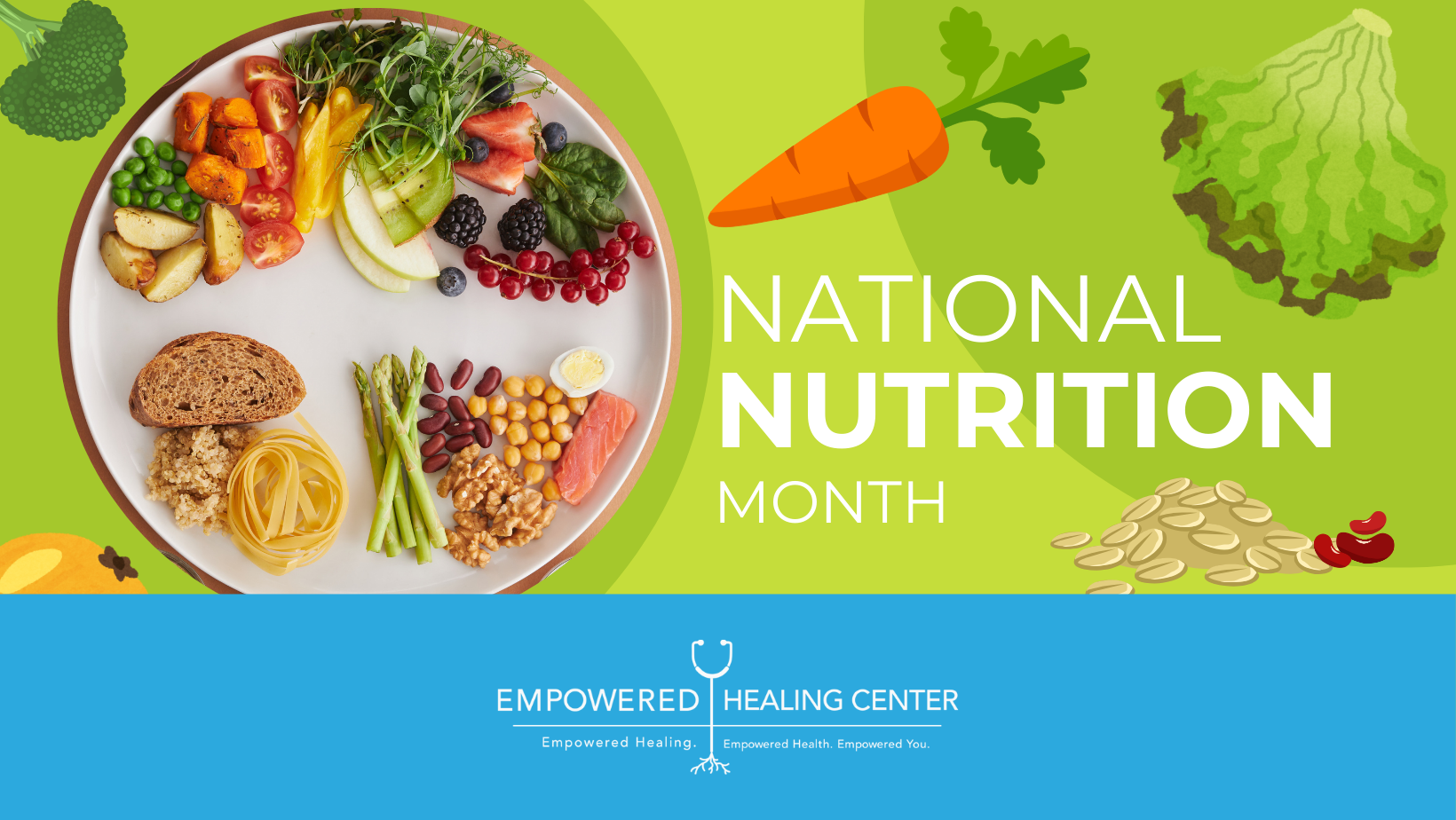
National Nutrition Month
National Nutrition Month, which occurs every March, is a nutrition education and information campaign supported yearly by the Academy of Nutrition and Dietetics. National Nutrition Month® started in 1973 as National Nutrition Week. Over time, the focus on health and nutrition started to flourish, and in 1980, it became a month-long observance.
This year’s theme is “Food Connects Us.” Food is a connecting factor for many of us. Food connects us to our cultures, our families and our friends. Sharing a meal is an opportunity to learn about its preparation, who made it and where the ingredients were sourced. Health, memories, traditions, seasons and access can all impact our relationship with food. While these factors influence the foods we eat, the foods we eat also affect our health.
How to get involved
Now that you know a little bit about it, what can you do to participate? Some ways to get involved could include:
- Commit to trying a new fruit or vegetable each week with your family.
- Focus on mindful eating by limiting screen time at meals, including phones, computers, TVs, and other devices.
- Try more meatless meals or incorporate choices such as beans and lentils, versatile plant-based protein sources that work in various dishes.
- Include your family’s help with food preparation — a skill for people of all ages.
- Organize a scavenger hunt for food items for a healthy recipe.
- Plant seeds for a vegetable garden.
- Trying new herbs and spices.
- Organize a healthy recipe contest or swap among departments or between first, second, and third shifts.
Read More
National Nutrition Month
Colorectal cancer is the second leading cause of cancer death in the United States, behind only lung cancer. The National Cancer Institute estimates that 152,810 people in the United States will receive a diagnosis of colon or rectal cancer in 2024, and approximately 53,010 will die of it.
Colorectal cancer awareness is important because many cases of cancer of the colon or rectum are preventable. Screening by colonoscopy can prevent this cancer because precancerous polyps found during the procedure can be removed at the same time. Furthermore, colonoscopy can also detect the cancer at early stages, when treatment is more likely to be successful.
The five-year relative survival rate for cancer localized to the colon or rectum is 90.9 percent, according to the National Cancer Institute’s Survellance, Epidemiology and End Results (SEER) Program. The survival rate drops significantly as the cancer spreads beyond those organs.
Cancer of the colon or rectum is more common in men than women. It is also more common among African Americans than people of other races. The median age of diagnosis in the United States is 66 years, while about 78 percent of newly diagnosed patients are aged 55 and older.
Read More